A collection of techniques and recipes for bistro cooking at home.

Bis•tro [bee-stroh] noun. “A small, modest European-style restaurant or cafe. Home cooking with robust earthy dishes and slow-cooked foods are typical. Classic techniques and classic ingredients make classic flavour.”

Saturday, 28 April 2012

Big Flavor in a Small Package


Good things come in packages, big or small. In the culinary world there are many ways to wrap up tasty things but I’m partial to the crepe. Essentially a very thin pancake, most North Americans think of crepes as sweet items usually in the form of Crepe Suzette, an orange flavored (sometimes flambĂ©ed) dessert style item. That’s what I thought too. We were all on the same page. One day however I was up in the Comox Valley and got to enjoy an amazing savory crepe at the farmer’s market. The chef preparing them cooked it on a special crepe machine and placed spinach, bacon, a smoked local cheese and a fried egg inside. Damn was it good.

This savory crepe recipe was one I got from her and made some changes to it, incorporating other crepe advice from other cookbooks. The best part about this recipe is that you make the crepes ahead and refrigerate them. This lets you work on the perfect filling, warm the crepes slightly in the oven and then roll them and serve them in your own time. I like when I am not rushed and I can get the presentation and the flavor perfect.

Shoot for big flavors with this recipe and showcase something special so that when it gets sliced into the eater is surprised. Following the crepe recipe is what I filled it mine with: fried mushrooms, caramelized onions and roasted chicken in a port cream sauce.

Savory Crepes

1 ½ cup flour
4 eggs
1 cup milk mixed with ½ cup whipping cream or 1 ½ cups half and half
4 Tbsp melted butter
2-3 Tbsp soft herbs, minced (tarragon, chives, parsley)
Salt and Pepper

Method:
  • Whisk eggs and dairy together vigorously until very smooth.
  • In phases, whisk wet ingredients into flour until smooth.
  • Refrigerate at least 30 minutes, up to 2 hours.
  • Remove from the fridge, mix lightly and then strain through a sieve.
  • Stir in the butter and herbs.
  • Prepare the largest flat bottom frying pan you have over medium-low heat. I strongly recommend a quick spray of oil or a wipe down with some canola. Set yourself up with the bowl of batter right beside the stove top and a plate beside you with 6 sheets of wax paper.
  • Pick up the pan and tilt slightly, at the same time pour in around a ½ cup of batter with your other hand, rotating the hot pan in mid air so the batter spreads quickly around the bottom. This is the hardest maneuver to master and also the most enjoyable.
  • Put the hand back down on the heat once the bottom is fully covered. If you put too much batter in the pan dump some out. If too little pour some in your shy spots.
  • The crepe will change color a bit for about a minute. Now’s the time to check it with a spatula or narrow flipper. It will have set enough that you should be able to flip it easily.
  • Cook a minute longer and put it on the sheet.
  • Start the whole process again. Wait until you want to put another crepe on top before covering the first with the wax paper so it doesn’t sweat!

Chicken, Mushroom and Port Cream Crepe Filling

1 onion, finely sliced
1 ½ cup sliced mushrooms
Couple of handfuls of leftover Roasted Chicken
Sprig of rosemary, minced
3 Tbsp Port
2 Tbsp heavy cream
Salt, Pepper and Butter

Method:
  • SautĂ© the onions in butter over medium until just starting to brown.
  • Add the mushrooms and cook over medium until soft and brown and onions have begun to caramelize.
  • Add in the chicken and herbs. Stir well and turn up the heat to medium high.
  • When the pan comes up in temperature, deglaze with the port.
  • Wait for the port to reduce a bit and add in the cream.
  • Season well and reduce the sauce for a little while until the whole pan has reached a thick, gooey consistency. Set aside and keep warm until you are ready to stuff your crepes.


Friday, 27 April 2012

The Roast I Love Most


 There is nothing better than a good roast. They exist in almost all food cultures in one way or another. I grew up with roasts on Sunday nights, Yorkshire puddings and good gravy. In the bistro context roasts are good multi-purpose items:  A succulent slow roasted meat dinner can provide unbelievable sandwich fixings for the following day, meats are usually cheaper if bought in bulk and gravy and meat bones are great for stock bases and soups. When roasting at home, I always use the same method regardless of pork or beef roast, shoulder or rump or whatever I find:
  • Use a vegetable base – the common one would be a carrot, an onion and a rib or two of celery chopped rough. This lifts the roast up out of the pan so heat can penetrate evenly and also provides a place for juices to drip during the roasting process and with these juices you can make the base for many a gravy or sauce.
  • Less is more when it comes to herbs, oils and garlic – definitely use them but use them in moderation, a coating of oil and a bit in the bottom with the veg. A sprinkling of herbs that are a good combo with what type of meat you are cooking is all you need. Unless you have some sort of exotically spiced meal in mind, don’t worry about it on the meat. Stick to the classics: salt and pepper, a bit of oil, some herbs and a little garlic.
  • Roast low, rest long – I never roast meats at high temps because frankly it doesn’t work. You want it to brown nicely on the inside and cook evenly. There are all sorts of minutes per pound rules of thumb but to get it right, use a thermometer. Cook it around 350⁰ until it is medium rare then remove it from the oven and tent it tightly with foil so it rests. If it browns too much in the oven, tent it in the oven so the foil disperses the heat.    
One way that I get good roasts is I buy meat in large uncut quantities. I buy full
pork tenderloins, beef strip loins or recently, pork legs. The meat is much cheaper and provides many different cuts in addition to the good roasting portion. After cutting this leg apart I was able to get ham steaks, hocks and good ham roasts.


French Country-Style Ham Roast

41b Ham Roast, trimmed of fat and cartilage 
¼ cup Salt
1 Tbsp Sugar
2 Tbsp Honey
1 Tbsp whole grain mustard
4 sprigs Rosemary
¼ cup strong full flavored, Red Wine or Port or Sherry
1 tsp Black pepper
3 cups Water
1 medium Onion, chopped
1 Carrot, chopped
1 large bulb Garlic, chopped

Method:
  • Place all of the ingredients except for the vegetables in a bowl. Refrigerate for 3 hours, turning frequently. This will not cure the meat as a ham but it will brine it slightly making it nice and moist.
  • Preheat the oven to 450⁰, place the vegetables in the bottom of a roast pan and put the ham on top. Pour in the liquid, it should cover the pan to about halfway up, add more water if necessary. The excess water will make a moist heat in the oven.
  • Using a thermometer roast the meat to medium rare and rest the meat with the juices and vegetables from the pan in a bowl for 2 hours uncovered.
  • Throw away the liquid and veg and slice thin. Delicious with strong mustard and pickles.


Wednesday, 25 April 2012

A Classic from the Streets of Paris and my Bistro Idea


I wrote this post a long time ago. Before I thought of making a bistro blog, before I planned on any of this. I wrote it because of the ingredients I had on hand. I had just visited my parents and they had given me some fresh lettuce from their garden and some eggs from the chickens. I had just finished smoking a large amount of home cured bacon and was looking for something a little different to do with it. I made this dish because it is a true classic. Its a salty, bright and rich flavored dish that is straight from the streets of Paris.

Although most people believe bistro fare is all heavy stews and deep rich flavors, it is highly seasonal. Of course in the fall and winter months it is deep, energy rich foods to keep you up and running but dishes like this one are the epitome of summer bistro food.

Spring greens, Frisee, Fried Lardon and Poached Egg Salad

Handful of Mixed Greens and Frisee or something similar, per plate
1 Strip of Bacon cut into 1cm lardons, per plate (aim for a nice, natural thick cut bacon)
1 Egg, per person

Dressing:
3 tbsp White Wine Vinegar or Lemon Juice
1 tbsp Whole Grain Mustard
1 tsp Dijon Mustard
6 tbsp canola oil (with maybe a little of the bacon fat whisked in? No? Just me then? Fine)
Pinch of salt and pepper

Method:
  • Poach the eggs and ice bath them. Trim them of any loose pieces. You want them a little underdone so the insides are thick but still runny. Check out this post on Poached Eggs.
  • Fry up the bacon, try to keep it from getting to crisp, it needs to have texture. Keep at room temp.
  • Clean and chop up the greens, keeping them large natural pieces.
  • Whisk together the dressing, slowly adding the oil in a stream to get it to emulsify with the acid and mustards. Check out this post on Dressings.
  • Dress the salad and top with some of the bacon once it’s plated. Reheat the eggs, dry quickly on paper towel and top the salad with them.

This salad makes an excellent appetizer or a whole meal. Serve it immediately.

Sunday, 22 April 2012

The World of Dressings: Vinaigrettes


For the long majority of my life, I lived in full belief that all dressings came from bottles. I didn’t know/care what was inside; they were always creamy sauces and one note flavors. I wasn’t a salad fan and only ate them when I realized my mom would carry through on her promise to keep me at the table until I ate my greens.

It wasn’t until much later that I tasted other dressings, realized that the large number of preservatives in the bottles weren’t the best for me, and found so many other delicious flavors. I wouldn’t say that salads are my favorite part of a meal but they keep me healthy and they are usually a balance that makes the meal whole.

Put a kitchen towel under your bowl
when you whisk, it will prevent your
bowl from slipping around and frees your
other hand to slowly drip your oil of choice
into your dressing, YAY emulsification!


For me, a good salad has many components: good crunchy leaves, soft cheese, some sort of protein and maybe perhaps some sort of topping like nuts or dried fruit. But it is the dressing that brings it all together. It provides its character and defines its place in the meal. A steak with a salad can be many things but if the salad is a creamy, thick garlic affair it is a different meal than a steak with a light spring, lemony salad. Both meals can hit the spot but both are completely different.

Dressings aren’t difficult to make. Mix up 1 part acid to three parts oil for a nice vinaigrette. I enjoy the whisk, some enjoy the jam jar (so they can give it a little shake and shoot it into the fridge when they are done). You could use lemon juice, balsamic, apple cider vinegar, wine vinegars, orange juice, etc. You could pair it with olive oils, hazelnut oils, sesame oils or rapeseed oil (canola oil). Additions could be made like a bit of yoghurt, herbs or roasted garlic. The options are endless and can immediately drum up a meal.


Here are a few classic vinaigrettes. 
Remember two things: The recipes are just guidelines so feel free to adjust the acid or oil to suite your tastes (or if the other parts of the meal are heavy try a lighter dressing), and always mix the salad and dressing together at the last minute.

Lemon Vinaigrette 
6 tbsp olive oil 
2 1/2 Tbsp lemon juice (about 1 lemon) 
pinch of salt and pepper

Balsamic Vinaigrette 
6 tbsp olive oil 
2 tbsp balsamic vinegar 
pinch of salt and pepper

French dressing 
½ clove garlic, minced 
1 tsp Dijon 
2 tbsp white or red wine vinegar 
6 tbsp olive oil 
pinch of salt and pepper


Bringing it all together: Leftovers Salad

Mixed greens (lettuce, spinach, dill leaves)
Roasted chicken (leftovers from last night's dinner)
Trail mix (nuts and cranberries only, NO M&Ms people), chopped up
Feta cheese, crumbled

Dressing:
½ clove garlic, minced
1½ tsp Whole grain mustard
2½ tbsp lemon juice
6 tbsp olive oil
pinch of salt and pepper

Method:
  • Whisk or shake up the dressing.
  • Dress the lettuce leaves with the dressing and plate.
  • Top each plate with layers of the rest of the ingredients and eat immediately.

The dressing is similar to a French dressing but more acidic to balance the rich roasted chicken and nuts. Plus I didn't have Dijon or white wine vinegar in my cupboard at the time!


Friday, 20 April 2012

Soups On! Hearty Spring Vegetable with Caramelized Onions


Soup is a great catch-all recipe. Almost all ingredients can be used or substituted and as long as your technique is right it can really be made from anything. Soup is also a heart warming dish. After a long morning or rough day, a bowl of soup and some crusty bread can make all the difference.

In the bistro, soups were simple and versatile. What was left in the kitchen after yesterday is the base for today’s soup. Hmmm roasted potatoes from last night’s supper still in the fridge? How about roasted potato and leek soup? Mussels didn’t sell as well as we thought yesterday? Perhaps a mussel, ginger and tomato broth soup?

  
For the amateur at home chefs like myself and yourself, soups also have a hidden benefit. Knife practice. Soups are not showcases for vegetable shapes, they are showcases for flavor. Spend some time practicing your knife skills. Getting that nice slice on the onions, dicing those carrots and properly going to town on the leeks is the goal here....and if they don’t turn out no one will know! Get the practice in now!


My mother just came down for Easter and brought me some lovely leeks from her garden. I had some odds and ends left in my fridge and pantry and some excellent homemade chicken and turkey stocks in the freezer. I combined all of these and used my basic formula for soup:


  1. Chop up all your soup ingredients (vegetables and meats) and sauté in a soup pot with equally small amounts butter and oil, cook meat first and then add in vegetables.
  2. Deglaze pan with wine/water/beer/whatever and add aromatics (garlic, herbs, etc)
  3. Cover the ingredients with stock and simmer for 25 minutes or longer. Everything should be tender.

That’s it! Of course this is quite general and there are exceptions but for the majority of soup recipes these are the steps. Some tips: 
  • Sometimes you need to add more stock to get the consistency. 
  • If you want to cream the soup, blend it at the end when everything is tender and add a small amount of heavy cream. 
  • Almost every soup I make has at least one onion, one carrot and one rib of celery as the base for the veggies. They are foundations to build on.


Hearty Garden Vegetable Soup with Caramelized Onions 
2 tbsp Oil
2 tbsp Butter 
6 small Onions, sliced thinly 
4 Carrots, diced 
4 small Leeks, sliced (remember to split the leeks down the centre and wash away from the root to remove impurities) 
4 ribs of Celery, diced 
4 cloves of Garlic, crushed 
Small handful of Herbs (in this case thyme and rosemary chopped finely) 
1 glass, White Wine (or port or sherry or whatever) 
2 litres, Chicken/Turkey Stock
Method:
  • Heat a large pot on medium high; melt about 2 tbsp oil and 2 tbsp butter together until bubbly and hot.
  • Add onions with a couple of stirs, a pinch of salt and turn the heat down to medium.
  • Cook for 20-25 minutes, stirring often and adjusting the heat so that onions soften, and don’t color too much, aim for a nice slow golden brown.
  • When onions are sticky brown and caramelized, turn up the high to medium high for 20 seconds and de-glaze with the wine. Stir vigorously and then add in the rest of the vegetables.
  • Turn the heat down to medium again and cook the vegetables for about 10 minutes until softened.
  • Add the garlic and herbs, stir for constantly for 30 seconds to make sure it is well mixed.
  • Add in the stock until it just covers the veggies and simmer for 20-25 minutes. If you want to the soup more of a stew consistency or you want it a bit lighter adjust the stock levels in either direction.
  • Check to make sure the vegetables are tender, because the soup is done!

The onion caramelizing is a small step but important as it adds a great depth of flavor (especially if you are using store bought stock or bouillon cubes).
Garden Vegetable Soup with Caramelized Onions


Saturday, 14 April 2012

The Art of Braising

I sat down a while back with Johnny Condor and started throwing out ideas and discussing different meat article ideas for our blogs. If you don't know him, Johnny writes at johnnycondoreats.blogspot.com and you should really pay him a visit. Johnny and I are big meat guys and I asked him to write down for me one of his favourite meat techniques and a good bistro style recipe to go along with it. He wasted no time in preparing a good article and recipe on the art of the braise. 


Johnny wrote:


            When Toby came to me with his thoughts about creating a forum in which to share thoughts and ideas about the techniques of cooking I was psyched. It is seemingly rare things to be able to talk about the basics or at the very least define what terms mean when you are flipping through cookbooks or watching cooking shows on TV. So I start off by saying thank you to Toby for taking on this project. As our conversation continued I found myself getting excited about sharing the admittedly limited knowledge that I have acquired. I have no formal training in cooking but I do consider myself to be a pretty good home cook. Toby told me to take a technique that I used on a fairly regular basis and write something about it. So here it is.

            I am a full on carnivore. All things meat, I am all for, which is evident to anyone who reads my blog, and one of my favourite ways of preparing meat is the glory of braising. Now a little definition for you, braising is basically starting something off with dry heat and moving to a wet heat. So searing off a piece of meat and then adding a liquid and allowing it to simmer. That is how I define it anyway. There are many actual chefs who define it differently but for my purposes I am going to go with the low and slow oven method. The true beauty of this method of cooking is that it allows you to use a less desirable cut of meat, which is generally cheaper by the way, and turn it into something that is rich and tender and simply a beautiful thing. I would not recommend using this method to cook really good cuts of meat. Braising something like filet mignon would be a waste of time and money. Just sear it on both sides and be done with it. You’re not going to get a better product than that. But if you get your hands on brisket, pork shoulder, beef short ribs, or shanks of any kind braising becomes an awesome option. It is also incredibly easy. 

You are looking at three basic steps to ensure an awesome end product. 
  1.  Sear off your meat: This means brown your meat on all sides over high heat. This seals in all of the wonderful juices, or so I am told, and that is a good thing. I do this in the pan or pot that I am going to transfer into the oven. Toss in your liquid before you put it in the oven and you are good to go.
  2.  Low and slow is the way: Here I am talking about cook time and oven temperature. The time should be long, this will vary depending on the size of what you are cooking and the temperature should be low. I braise around 275 degrees or so. Just cook it until it is done. Poke it a little bit with a finger it should feel like a medium rare steak that is there is some give to it. If it is really firm it is not done yet, if it falls apart you have left it too long. 
  3.  Let it rest. You should be doing this every time you cook any meat. Just let it sit for 5-10 minutes. This allows the juices to redistribute through the meat and will give you a juicy end product rather than a dry one. That, my friends, is how I braise.


            Now let’s put this sweet technique into practice. I am thinking oxtail in red wine. So here is a little recipe to rock your new found braising skills.

Oxtail Braised in Red Wine

2-3 pieces of oxtail
Salt and pepper
2 tbsp oil
1 onion finely diced
½ a bottle of wine that you would drink
3 cloves of garlic smashed

Method:
  • Preheat your oven to 275 degrees
  •  Season your oxtail liberally and sear it off in a roasting pan on the stovetop until it is goldenish
  •  Add your wine, garlic and onions and cover with a lid. Transfer the pan to the oven and cook until it is tender. And you are done, you just braised baby. Enjoy. 
Serve it with the sides you like. Pictured is oxtail, potato, parsnip, and horseradish puree and a fall coleslaw.
  

Thursday, 12 April 2012

A Sweet, Sweet Glaze


In the second and last article about my thanksgiving feast we shall discuss glazed vegetables. This is an age old bistro technique but really rose to popularity in North America in the eighties and nineties. If you’ve ever eaten candied yams or sweet carrots as a side dish then you’ve had this in an altered form of the bistro style (Usually with more sugar). The goal of a good glazed vegetable is to use a very small amount of sugar to bring out the natural sweetness in the vegetables. The usual veggies used are things like sweet potatoes and yams, carrots, parsnips, turnips, and pearl onions.

The best way to make a good glazed veg dish is to ‘turn’ your produce into a slightly rounded shape. What I tend to do is cut the vegetables into 2” long cylinders and then trim the ends to create an oval shape (see the picture). Making them round or oval shape like this lets the veggies roll around in the pan and get perfectly glazed. This is also good practice for improving your knife skills!


Glazed Vegetables

Prepared vegetables (for each type of vegetable to be cooked, you’ll need a separate pan and a separate set of all the ingredients)
A small knob of butter
A large pinch of sugar
A sprig of herbs (rosemary, thyme or bay are classic root vegetable pairings)

Method:

  • Put the vegetables in a pot big enough for them to be in a single layer and roll a little tiny bit.
  • Cover with water until a half inch over the vegetables.
  • Place the rest of the ingredients into the pot (or pots if doing multiple veggies) and bring to a boil.
  • Keep the water at a simmer uncovered. The goal is to have the vegetables finish cooking and become tender as the water level simmers off to about 2 tablespoons. If you need to add a bit more water as it boils away or scoop out the vegetables into a bowl and reduce the water if they are cooking too slowly or too fast
  • I will fully admit, although I have used this technique seven or eight times I have only ever gotten the water to reach the right level and have the vegetables fully cooked without intervening once. It takes practice and a good knowledge of veggies.
  • When it gets down to the right level, season with a pinch of salt and roll around to fully glaze. Remove the herb seasoning before serving.

These can be cooked before hand and kept at room temperature for up an hour or two, simply toss back into the pan and reheat on low when you are ready for them.

The Road to a Perfect Bird: Brining


Easter has come and gone and my oh my was the turkey delicious. I would love to say that it was my artful basting but...nope. Was it the extra few dollars I spent on a free range, local, heritage bird...Nope. I cheap-ed out on the bird and got a (still fresh not frozen) free range classic supermarket bird. To tell you the truth it was all due to the brine.

I learned about brine a few years ago and gave it a try with some pork chops I had. It worked and it was good but the work wasn’t equal to the payoff. Pork done right is naturally juicy. I called it a good theory and then packed it away in my bag of tricks. It wasn’t until recently I got my hands on Thomas Keller’s Brine recipe from Bouchon. It’s not difficult to do; the chicken and turkey it makes are unbelievable and stay moist.

If you’re going to roast a bird or have people over for dinner, put a little thought into it and make it something unbelievable with a good brining.

Bird Brine (adapted, played with and changed from Bouchon)

1 cup kosher salt
½ cup honey
15 bay leaves
1 head of garlic, smashed with skin left on
2 Tbsp peppercorns
3 sprigs rosemary
4-5 sprigs thyme
1 half bunch parsley sprigs
(Really any selection of herbage will do for the bird but I strongly suggest these three, good markets usually have a “poultry bag” of fresh herbs and it is usually the perfect mix)
Grated zest and juice of 2 lemons (if brining a chicken) or 2 oranges (if turkey)

Method:

  • Combine all the ingredients in a large pot with 2 litres of water, bring to a boil and stir for 1 minute.
  • Remove from heat, pour into a clean bowl and add 1 more litre of cold water.
  • COMPLETELY chill before using. Accomplish this by either making the brine the night before or by using multiple ice baths to cool it down quickly.
  • Place your turkey or chicken in a large pot and pour the brine over. It should completely cover the bird. If not, add water to cover. (My friend Josh recommends using a good clean new garbage bag, he places the bird and brine inside and then seals the bag tight to surround the whole bird with liquid)
  • Place the pot (or bag) in the fridge and refrigerate for 6 hours for chicken or 8 hours for turkey.
  • Remove the bird from the brine, rinse, pat dry and cook. See the article on the humble roast chicken.


Wednesday, 11 April 2012

Happy Belated Easter


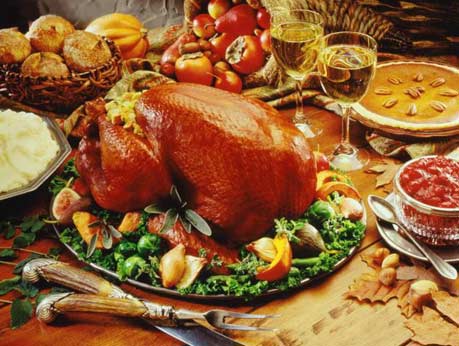
turkey dinnerThis weekend was Easter. It was my pleasure to be host to my Mom and Grandma, who usually hold holiday feasts at their houses with the traditional turkey, stuffing, mashed potatoes and flour thickened gravy. Their traditional feasts are delicious. I eat, enter a food coma, awaken, eat some more. But this weekend they were in my house. We do things differently. I brined my turkey, shoved an orange in its butt and cancelled the stuffing. I made a light turkey jus rather than a heavy sauce and made glazed root vegetables and pomme puree as sides. It seemed lighter, familiar but different.

Bistro cooking is often thought of as the traditional feast, heavy thick sauces and starches all over but in most cases it reflected what was in season and was light, fresh and healthy. I will be including a few of the recipes I used over the next few days but I encourage you to look back on your family favorites and see if you can’t use a couple of new techniques to make them a bit lighter.

Thursday, 5 April 2012

The Way The Chicken Would Prefer It: Poached Eggs


Eggs are effing fantastic. I'll take them anyway I can get them: scrambled, fried, runny, with soldiers, in an omelette, boiled...I could go on and on and I'm starting to think breakfast for dinner is the best idea I've had all day.

I cook poached eggs a lot. I learned how to poach them from my mother and she still cooks them for me when I visit.
A good poached egg should be round (no trailing bits) with a thick, molasses like yolk (no thin, runny liquid). A cloud filled with sunshine, delicious sunshine.
The two rules to good poached eggs are:

  1. Use fresh eggs - the older they are the more the whites deteriorate and the more likely they are to trail off the main body in the pan rather than come together all pretty like in a globe shape.
  2. Vinegar - yeah. Vinegar. Mr egg doesn`t mix with Mr vinegar. They get an oil and water thing going on and the presence of vinegar in the water causes the yolk to stick together. It will not flavor the final product.

Poached eggs

Eggs, fresh
White vinegar, 1 Tbsp for the pot and 1 Tbsp for each egg

Method:
  • Get a deep pot of water on full rolling boil and add the Tbsp of vinegar, turn down to medium high.
  • Crack each egg into its own little ramekin or bowl and (5 mins before cooking) pour a Tbsp of vinegar over each egg. Swish it around to make sure the vinegar gets around the egg. This will firm up the yolk.
  • With a wooden spoon, give the water a couple of good stirs to create a vortex in the water and then slowly lower an egg into the middle. The egg should cook about 2 mins.
  • Lift the egg out with a slotted spoon and transfer to paper towel.
  • Repeat the last three steps with any other eggs you are cooking.

Making more than a couple of eggs or making them in advance:
  • Cook the eggs as above, one at a time but only for about 1 min 45 serconds (about 90% of what you want, just about there) and then remove them with a slotted spoon to a bowl of ice water to stop them from cooking.
  • When they are cooled, lift them out carefully and trim (make them look pretty)
  • Store them in the ice bath until you are ready to use them, maximum 24 hours. When you are ready to serve simply put on a pot of simmering water and reheat each egg (you can do multiples in one pan now) for about 30 seconds each.
  • This is a great way to make breakfast for a crowd as you can do the prep well before and simply reheat.


Wednesday, 4 April 2012

The Humble Roasted Chicken

I'm a fan of the classics and there is nothing more classic than the roasted chicken. It populated many a table when I was younger. In bistro style, roast chickens are incredibly versatile. You can serve them with a nice salad, a mushroom ragu, maybe some roast potatoes and glazed veggies like I did here. A simple dish like this is easy to prepare but filled with food memories and so more often than not....it is an easy dish to screw up. Less is more. Some seasoning, maybe some herbs and maybe some oil. Maybe. If you're going to put some effort in, put it into a good side dish that will stand up to the flavour of the chicken.

Roasted Chicken

3 pound Chicken
Salt & Pepper
Oil (maybe)
Herbs (maybe)

Method:

  • Preheat Oven to maximum (around 500 degrees)
  • Take the chicken out of the fridge and place on a cutting board about 30 minutes before you plan on putting it in the oven.
  • Season the bird inside and out with salt and pepper. Do this from a from about a foot away from the bird so the seasoning spreads and doesn't bunch up.
  • If you would like, spread some herbs (thyme and/or rosemary are classic choices) onto the bird with a little bit of oil drizzled and rubbed in (don't go heavy on either the oil or herbs, let the chicken shine)
  • When the oven is preheated, place the bird inside and IMMEDIATELY turn it down to 350 degrees.
  • The bird should cook for about 45 mins, it all depends on the size of the bird and the oven. Sometimes a nice juicy bird will take longer.
  • If you notice it browning a little too much, tent the bird with tinfoil, do not seal it in. No steaming chicken!
  • When the bird is done cooking, take it out and seal it up with foil and let it rest. For this bird I would say about 30 mins. You want the juices to settle down.
  • Serve with your choice of sides

Roasted Chicken, Hasselback potatoes, glazed carrots and chicken jus.